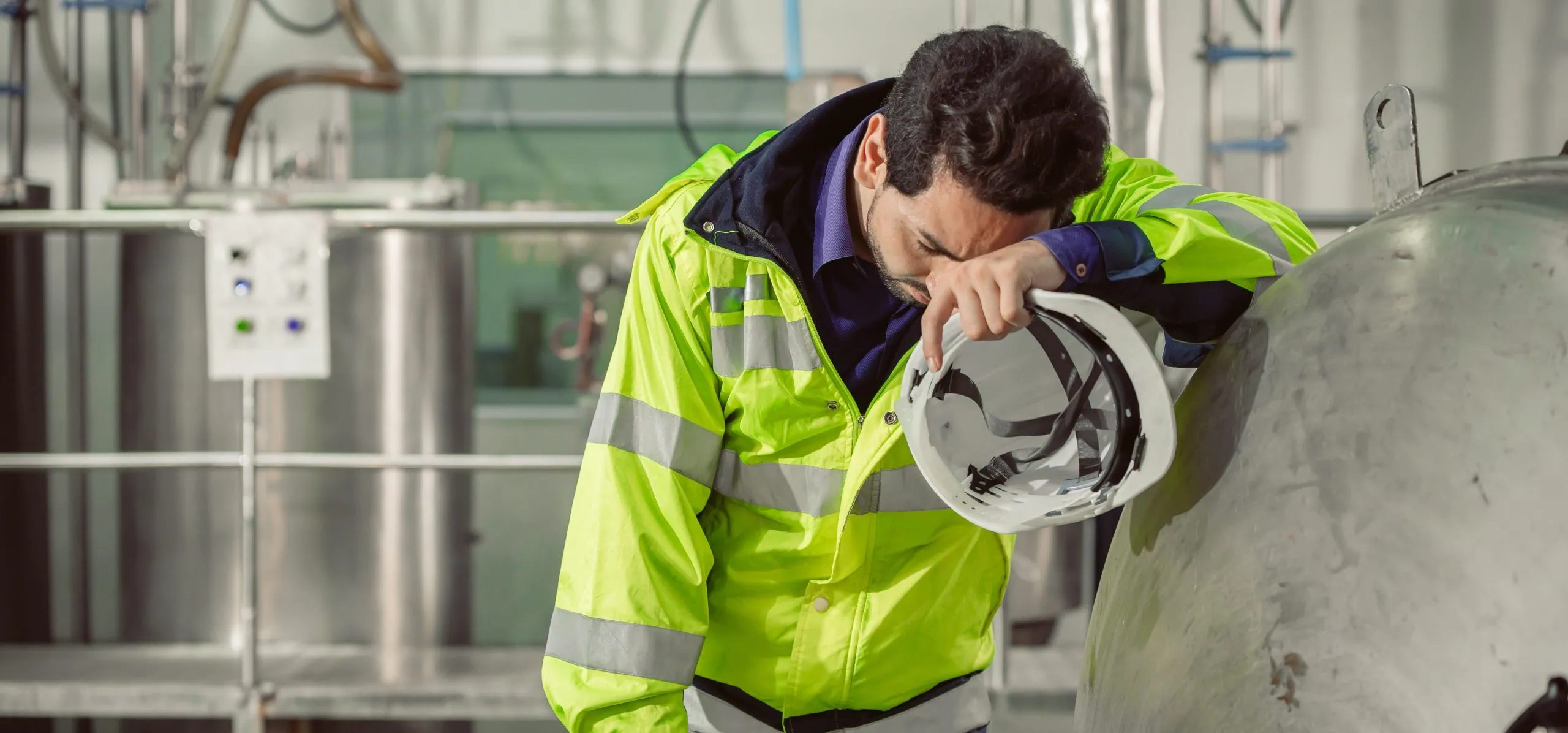
The Impact of Heat Stress, Fatigue, and Noise Exposure on Mental Health in the Workplace

Many years ago, worker health and safety was perceived as a cost of doing business; however, as times evolve this perception is changing. The people that work at an organization are the most valuable assets of organizations and often form the backbone of any business. With this, the need to prioritize worker health and safety has never been more apparent. While physical risks such as slips, falls, and accidents involving machinery have been widely recognised for years, the less visible impacts like heat stress, fatigue, and noise exposure can have profound effects on workers’ mental wellbeing. As more emphasis is placed on these workplace hazards it’s important to recognise that they not only impact physical health but can also have a significant psychological toll that is often overlooked.
This guide explores the interconnected relationship between heat stress, fatigue, noise exposure, and mental health. By acknowledging and understanding the impact they can have on an individual’s mental health, more proactive measures can be taken to mitigate these risks to ensure a healthier, safer, and more productive workplace.
Understanding heat stress: A catalyst for mental strain
Heat stress occurs when the body is unable to effectively thermoregulate. Thermoregulation is how the body maintains its internal temperature. When the body is unable to cool down, it can lead to a range of heat-related illnesses such as the feeling of dizziness or in severe cases, heat exhaustion or heat stroke. Beyond the immediate physical dangers that are often more visible, the mental toll of working in hot environments can be significant. Prolonged exposure to high temperatures not only impairs physical performance but also takes a psychological toll, causing irritability, decreased cognitive function, and heightened feelings of anxiety.
When workers experience mental fatigue and decreased cognitive function it impacts productivity levels. As cognitive capacity diminishes, so too does decision-making ability and concentration. According to a publication from the International Labour Organization, for every 1°C / 33.8°F increase in temperature, productivity drops by approximately 2% in high-heat environments.
Interestingly, while moderate sun exposure is known to improve mental well-being by increasing vitamin D levels, which has been shown to boost mood and energy levels, excessive heat has the opposite effect. When temperatures rise too high, the body experiences stress as it works to maintain homeostasis. This physical strain leads to heightened cortisol levels, a hormone associated with stress, which can contribute to feelings of anxiety, depression, and mental fatigue. Over time, workers may begin to experience chronic stress and mental health issues as they struggle to manage the continuous strain of working in extreme temperatures.
Further to this, an article from the American Psychological Association found that individuals exposed to extreme heat are more likely to report symptoms of anxiety and depression, adding to evidence linking environmental stressors with mental health.
Fatigue: The silent saboteur of mental health
Workplace fatigue, a state of physical and mental exhaustion, is more than just being tired after a long shift. It stems from prolonged overwork, lack of sleep, and exposure to hazardous conditions. This can lead to diminished alertness, poor judgment, and emotional instability. Fatigued workers are more vulnerable to stress and anxiety, making them less resilient in dealing with workplace challenges.
For instance, a study from Columbia University Irving Medical Center found that health care workers who reported poor sleep were 70% more likely to experience anxiety and 50% more likely to report psychological distress compared to their colleagues who were well-rested. This is alarming when considering the prevalence of fatigue in industries that demand long hours or shift work.
Another published study determined that fatigued workers were 62% more likely to be involved in accidents due to a decline in performance and an increase in human error. Fatigue-related incidents can often be the result of poor judgment and slower reaction times. This decrease in mental function puts workers at greater risk, not only physically but also mentally, as the stress of an incident or near-miss can magnify their psychological strain.
Long working hours, shift work or overtime work reduce the time for sleep resulting in fatigue. In turn this can lead to mental burnout, with fatigue contributing to reduced motivation, emotional instability, and mental exhaustion. These workers are more prone to experiencing long-term mental health challenges, underscoring the need for effective fatigue management in high-risk industries.
In the UK burnout costs organizations £700 million every year due to absenteeism as a result of stress and exhaustion. In the US, workers who burnout cost approximately US$3,400 for every US$10,000 in salary because of both higher turnover and loss of productivity. It’s evident that the combination of physical discomfort and mental fatigue contributes to a heightened risk of both short and long-term psychological issues.
Noise exposure: A hidden threat to mental health
Long-term noise exposure is a prominent issue in many industrial settings, however its important to recognise that impact extends beyond hearing loss. High levels of noise can also significantly affect mental well-being. The constant exposure to loud sounds can disrupt concentration, increase stress levels, and contribute to mental health issues such as anxiety, depression, and cognitive decline.
It was estimated that 600 million workers were exposed to harmful levels of noise, globally. Each year, about 22 million workers were exposed to harmful levels of noise in the USA, while approximately 1.7 million workers were exposed to more than 85 dB(A) of noise in Great Britain. Prolonged noise exposure can lead to both physical and mental distress. There’s no wonder why the British military and CIA have deployed the use of loud music and white noise over 24 hours a day as part of interrogation techniques. The mental strain caused by constant noise, combined with the physical exertion required on the job, can push workers toward a state of chronic stress and anxiety.
In addition to these mental health concerns, prolonged noise exposure can lead to hearing loss which is much widely discussed, however, this can often exacerbate feelings of isolation and loneliness. Workers experiencing hearing loss due to excessive noise may find it increasingly difficult to communicate with colleagues, leading to social withdrawal and a sense of detachment from the work environment. This isolation can further amplify feelings of depression and anxiety, creating a vicious cycle where the mental health effects of noise exposure extend beyond the physical impact on hearing.
Furthermore, research has discovered prolonged noise exposure above 85 decibels (dB) has also been linked to heightened levels of cortisol. Increased cortisol levels over time can exacerbate feelings of anxiety, irritability, and depressive symptoms. In these environments, workers are forced to expend more mental energy just to maintain focus, often leading to cognitive overload and emotional exhaustion.
The compounding effect of multiple hazards on mental wellbeing
While heat stress, fatigue, and noise exposure each pose significant individual threats to mental health, the effects are often compounded when workers are exposed to more than one of these hazards simultaneously. This can be common in industries such as utilities, oil and gas, construction, mining, and offshore drilling, where workers may endure high temperatures, prolonged shifts, and excessive noise all at once.
For instance, workers on offshore oil rigs can be deployed to some of the hottest locations in the world, enduring high temperatures while working shifts that can last up to 16 hours a day. This combined with unrelenting sounds that often exceed safe decibel limits over a 24-hour operation can lead to workers experiencing heightened levels of mental fatigue and stress. Collectively, these workplace hazards can contribute to increased burnout, absenteeism, and long-term mental health conditions. The isolated environment of an oil rig can also amplify feelings of loneliness and anxiety, as workers are often cut off from support systems.
When workers are exposed to multiple hazards it significantly heightens the risk of mental health issues. According to various studies from the Center for Disease and Control and Benchmark OHS, when workers are exposed to multiple stressors such as high temperatures, noise, and fatigue, the risk of developing mental health-related issues such as anxiety, depression, and burnout increases. This highlights the urgent need for integrated approaches to workplace safety, considering both physical and mental health.
Mitigating the mental health impact: Proactive solutions
Addressing the mental health challenges posed by heat stress, fatigue, and noise exposure requires a multi-faceted approach. Employers must prioritize both physical safety and mental wellbeing by adopting proactive measures to reduce these hazards.
Monitoring worker responses
Advanced wearable solutions, such as Bodytrak®, provide real-time, individual physiological monitoring of workplace stressors. By implementing Bodytrak, users can monitor core body temperature, heart rate, physiological strain and noise exposure. By capturing these insights it can detect early signs of heat stress, fatigue and unsafe noise exposure. If a preset threshold is exceeded, an alert is triggered to the user and supervisors enabling early intervention. This prevents heat stress, fatigue-induced incidents and hearing loss that can in turn trigger mental health-related issues and strain – prevention is the best solution.
Implementing rest breaks and shifts
Providing regular rest breaks and adjusting shifts to minimize exposure to heat and noise can significantly reduce both physical and mental fatigue. Encouraging workers to take mental health breaks, especially in high-risk environments, helps to combat the onset of burnout.
Access to automated reports via Bodytrak can help organizations capture valuable insights and identify trends to make informed decisions when adjusting schedules. For instance, organizations can identify specific time periods or certain shift patterns that may make workers more susceptible to fatigue. From this, they may decide to alter shift timings or consider changing the workload during these periods to mitigate the risks.
Hearing protection and noise reduction strategies
Investing in high-quality hearing protection and employing noise-reduction strategies, such as sound barriers or quieter machinery, can lower the mental health risks associated with prolonged noise exposure. Simple changes to workplace design can reduce stress and anxiety while enhancing overall well-being. The solution from Bodytrak offers both in-ear hearing protection through the Hear:Safe™ Accessories as well as noise metering so that organizations can effectively manage multiple workplace hazards through one comprehensive solution.
Mental health support programmes
Lastly, offering mental health support programmes, including access to counselors and stress-management workshops, can help workers manage the psychological effects of heat stress, fatigue, and noise exposure. Employers should foster a workplace culture that promotes open discussions about mental health and provides employees with the resources they need to thrive.
Why prioritizing mental wellbeing in the face of workplace hazards is important
Heat stress, fatigue, and noise exposure are not just physical hazards; they are significant contributors to mental health issues in the workplace. When multiple hazards like this converge, they create a high-risk environment. As industries continue to evolve, it’s imperative that organizations understand the complete impact of these risks in order to implement effective strategies to mitigate them.
For many years society has focused on the physical wellbeing of workers, however, times are changing – mental wellbeing is just as important. The consequences of other workplace incidents, such as heat stress, fatigue and noise exposure, can impact each individual’s mental health. By adopting a holistic approach that encompasses new and innovative solutions that proactively mitigate these risks, employers can create safer, healthier, and more productive work environments both physically and mentally.